The web sounds the same
I keep opening new product sites that all sound the same. The product will unlock something. It will empower a team. The experience is seamless. The workflow is revolutionary.
I get through the headline and still don't know what the app does. Take away the logo and the same copy could work for ten other products.
This kind of copy was around before AI. It's just much easier to generate now. I use AI for writing too, but I still want the result to sound like me and explain what I'm building.
That's what interests me about Simplified Technical English. It was developed for aviation, but some of its rules are useful when I'm thinking about copy for an app.
What aviation can teach us
In the late 1970s, European airlines asked the aerospace industry to make maintenance documents easier to understand. About 80 percent of those airlines were from countries where English was not the first language.1
The work became ASD-STE100 Simplified Technical English. Its industry group published Issue 9 in January 2025.1
The standard has 53 rules and 875 approved words.2 Each word usually has one meaning and one part of speech. Writers can add necessary technical terms.
A descriptive sentence can have no more than 25 words. Each sentence covers one subject. Each paragraph covers one topic in no more than six sentences.2
A 1995 study found that Simplified English helped readers understand procedures and find information. Readers whose first language was not English appeared to gain more, though the samples were too small for comparison.3
There's a limit to how much you can simplify. A 2025 study of 8.2 million words in aviation manuals found that some simplification weakened useful connections between ideas.4 I don't want to cut a sentence down so much that the reader has to guess what I mean.
What I look for in the copy
The part I find useful is choosing clear words and sticking with them. Here's how I'd apply that to a landing page.
Use words people say
I'd say "use" instead of "leverage" and "help" instead of "facilitate." If I wouldn't say a word when explaining the app to someone, I question why it's on the page.
I use the Unslop skill to catch these habits and other common AI writing patterns.5It's useful for spotting wording I've stopped noticing after reading the same draft.
Name the action
When I read "transform your workflow," I still have to ask what the product does. I'd rather read what I can do with it and what happens next. If there's a claim about results, I want something to back it up.
Keep one idea in each sentence
If a sentence tries to explain several benefits at once, I split it up. I want the reader to understand each point without having to read it twice. Any detail that supports the claim still needs to stay.
Use one term for one thing
If I call a feature an agent, I keep calling it an agent. Switching between assistant, copilot, and partner makes it sound like I'm talking about different things.
Keep the person in the copy
I still want my opinions and the details I care about in the copy. The edit should make those easier to understand. It shouldn't make me sound like every other landing page.5
Three real examples
These are lines from public product pages, followed by how I'd rewrite them.
Project management app

"Project management at the speed of thought."
My rewrite
"Create and update project tasks from your AI coding tool."
I don't know what "the speed of thought" means here. The rewrite tells me what I can do and where I can do it.
Sales data platform

"Revolutionize your sales ops with accurate data."
My rewrite
"Search 1.3 billion contact records and update your CRM."
The number of records and the CRM update tell me more than "revolutionize." I can start to see how I'd use the product.
AI chat app
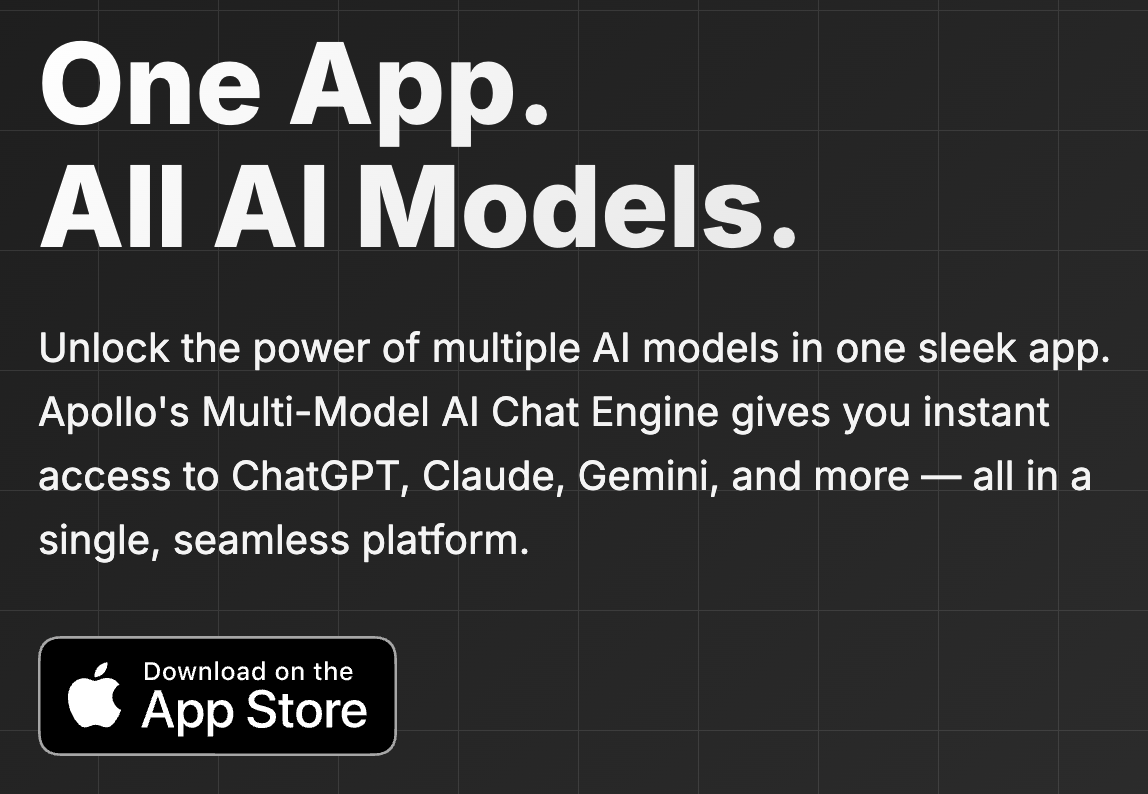
"Unlock the power of multiple AI models in one sleek app."
My rewrite
"Use ChatGPT, Claude, Gemini, and other models in one app."
I want to know which models I can use. "Unlock the power" doesn't tell me that, and I can judge how the app looks from the screenshots.
My editing checklist
These are the questions I want to answer when I read a draft.
- Can a reader say what the product does after the first sentence?
- Would I say these words?
- Does each sentence make one main claim?
- Do I use the same term for the same thing?
- Can I remove an adjective without losing information?
- Can I back up the claims I'm making?
- Does this still sound like me?
A prompt for the first edit
For a first pass, you can paste this above your draft and let the agent suggest edits.
Edit this copy for clarity. Keep its meaning and factual claims.
Use common words and active voice. Keep one main idea in each sentence.
Replace vague claims with specific actions, or flag missing evidence.
Use the same term for the same product or feature.
Remove filler, hype, forced contrasts, and empty metaphors.
Keep the writer's opinions and natural rhythm.
Do not claim formal ASD-STE100 compliance.
Explain any change that affects the meaning.
I still read the final version
I use AI to help with the draft and the edits. I still read the result and check that it says what I mean. A cleaner sentence can still describe the product wrong.
I want someone to understand what I'm building without having to decode the copy. And I want it to sound like something I'd actually say.
References
- ASD Simplified Technical English Maintenance Group, About ASD-STE100.
- ASD Simplified Technical English Maintenance Group, ASD-STE100 Simplified Technical English, Issue 9.
- Serena K. Shubert and others, The Comprehensibility of Simplified English in Procedures, 1995.
- Amber Wanwen Wang and Eric Friginal, From Tradition to Innovation? A Diachronic Corpus Analysis of Simplified Technical English in Aviation, 2025.
- Cursor, Unslop editing skill.